Dental Assistant Programs in Boise: Everything You Need to Know Before Choosing One
There’s no shortage of dental assistant programs out there — community colleges, trade schools, online platforms, hybrid programs, weekend programs. The real question isn’t whether you can find one. It’s whether the one you choose will actually prepare you to work confidently in a dental office.
This guide covers what separates good programs from mediocre ones, what the training actually involves, and how to make a smart decision in Boise.
What dental assistant programs should teach you
A strong program prepares you for the full scope of what dental assistants do — not just one piece of it. That means covering both clinical and administrative skills:
Clinical training:
- Chairside assisting — supporting the dentist during exams, restorations, extractions, and specialty procedures
- Dental radiography — taking, processing, and evaluating X-rays safely
- Infection control — sterilizing instruments, disinfecting operatories, following OSHA guidelines
- Dental materials — mixing and preparing impression materials, cements, and composites
- Patient care — positioning patients, managing comfort, explaining procedures and aftercare
Administrative training:
- Patient scheduling and appointment management
- Dental charting and terminology
- Insurance verification and billing basics
- Electronic records management
- HIPAA compliance and patient privacy
Programs that skip either side leave gaps in your readiness.
Types of dental assistant programs
Certificate / accelerated programs
- Length: Weeks to a few months
- Focus: Essential clinical and administrative skills
- Cost: Typically the most affordable option
- Best for: Students who want to start working quickly
Diploma programs
- Length: 6–12 months
- Focus: Broader curriculum, often with externships
- Cost: Moderate
- Best for: Students who want a more comprehensive training experience
Associate’s degree programs
- Length: 1–2 years
- Focus: Dental assisting plus general education courses
- Cost: Higher
- Best for: Students who want an academic degree credential
How to compare programs: a checklist
Use this checklist when evaluating any dental assistant program:
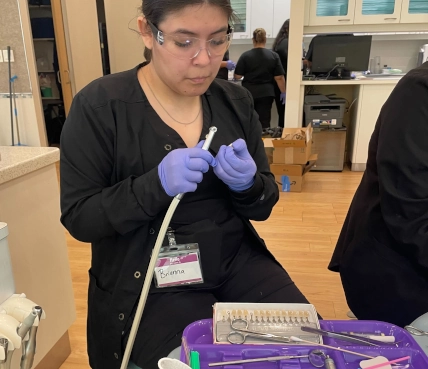
- Does the program include supervised, hands-on clinical practice?
- Is the curriculum structured around specific skills and competencies?
- How long is the program from enrollment to completion?
- What is the total cost, including all materials and exam fees?
- Are flexible payment plans available?
- Does the program prepare you for a certification or registration exam?
- Does the school offer career support after graduation?
- Is prior healthcare experience required, or is it open to beginners?
What makes some programs better than others
The difference between a great program and an average one often comes down to three things:
1. Quality of hands-on training
Programs that put you in realistic clinical scenarios with real equipment and instructor feedback produce stronger graduates than those that rely entirely on videos and quizzes.
2. Career outcomes focus
The best programs aren’t just teaching skills — they’re building job-ready professionals. That means training in professionalism, communication, time management, and teamwork alongside clinical technique.
3. Honest, transparent pricing
No hidden fees, no surprise charges, no financial aid-dependent pricing that inflates the real cost. You should know exactly what you’re paying on day one.
Review our tuition: Tuition.
Take the next step at Boise Dental Assistant School
- Explore the program: Program details
- Review tuition: Tuition
- Talk to our team: Contact
- Apply: How to apply
You're 12 weeks from the dental assistant career you deserve.